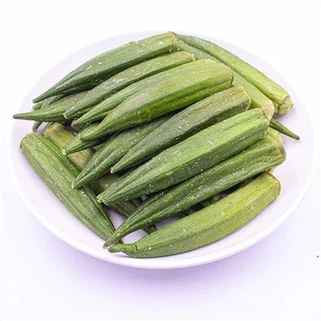


Vacuum fried lotus root chips processed under low-temperature frying technology to maintain fiber cavity structure, controlled starch expansion, and stable crunchy slice texture for snack brands and industrial food applications.
Product Specifications
|
Product Name |
Vacuum Fried Lotus root chips |
|
Ingredients |
Lotus root,Vegetable oil,Maltose |
|
Specification |
Sliced |
|
Certificate |
ISO 22002,HACCP,KOSHER,BRC,HALAL |
|
Shelf life |
12 months |
|
Edible method |
Ready to eat |
|
Season |
September-February |
|
Brand |
OEM or ASIA FARM |
|
Processing method |
Vacuum dehydration processing technology |
|
Preservation method |
Store in the shade at room temperature |
|
Ways of payment |
LC or TT TT 50% of the purchase price after the contract is signed and TT 50% of the purchase price before shipment. |

Packaging & Delivery
|
Delivery time |
15 days |
|
Export port |
Xiamen Port, China (The factory is about 1.5 hours' drive from Xiamen Port) |
|
Nearest airport |
Xiamen Gaoqi International Airport, China (The factory is about 1.5 hours' drive from Xiamen Gaoqi International Airport) |
|
Packaging details |
Supermarket or convenience store (color printing bag 50~100g/bag) Business use (aluminum foil bag 1kg/bag) |

Fiber Cavity Structure Control
Lotus root has a unique porous fiber-hole structure, which requires special control during frying to avoid collapse or deformation.
- Vacuum pressure stabilizes internal air cavity structure during dehydration
- Slice alignment reduces uneven hole deformation after frying
- Controlled moisture release prevents structural collapse of fiber network

Slice Expansion & Crisp Formation
- Uniform slicing ensures consistent heat penetration across fiber rings
- Low-temperature frying prevents rapid outer hardening while inner moisture remains
- Starch expansion is controlled to avoid hollow brittleness

Oil Absorption Control
- Vacuum pressure regulation reduces oil penetration into fiber channels
- Centrifugal de-oiling removes surface oil after frying
- Helps maintain clean mouthfeel despite porous structure

OEM Capability
- Slice thickness customization (thin / standard / thick)
- Hole structure retention grading (high / medium / standard)
- Light seasoning or natural flavor formats
- Retail packaging and bulk supply options

Quality Control
- Lotus root grading based on fiber density and hole uniformity
- Slice thickness calibration for consistent cavity preservation
- Vacuum frying temperature curve monitoring for stable expansion
- Oil filtration system to reduce burnt residue impact
- Metal detection before final packaging

FAQ
Hot Tags: vacuum fried lotus root chips, China, manufacturers, factory, wholesale, price